Define the Area
Build campaigns around useful geographic boundaries, markets, service areas, events, locations, or other relevant targeting logic.

Geolocation + Location-Based Marketing
Location-based campaigns can help businesses reach audiences around defined markets, service areas, events, locations, and geographic opportunities.
Fawkes builds the landing experience and public-facing digital foundation. Brilliance One connects campaign responses with lead capture, CRM, communications, automation, and follow-up.
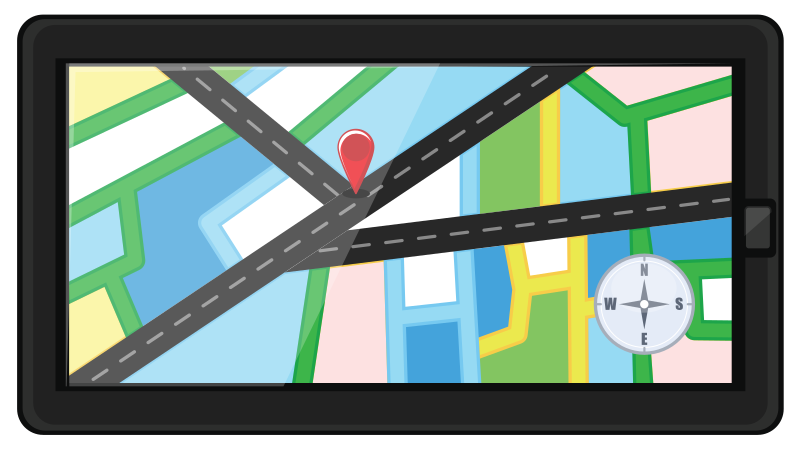
Location With a Purpose
Knowing where an audience is located can help improve campaign relevance, but geography alone does not create a successful campaign.
The audience, offer, timing, landing experience, lead capture, and follow-up still have to work together.
Build campaigns around useful geographic boundaries, markets, service areas, events, locations, or other relevant targeting logic.
Align campaign creative and offers with the audience and location instead of sending everyone the same generic message.
Send traffic to a focused landing experience designed around the campaign, offer, location, and desired customer action.
Use calls, forms, appointments, quote requests, and other conversion points to turn campaign interest into an identifiable opportunity.
Move campaign responses into CRM, communications, automation, tasks, and customer workflows instead of ending at the click.
Compare targeting, engagement, conversions, lead quality, and customer actions rather than measuring geographic reach alone.
Location-Based Campaign Uses
Location targeting is most useful when where a person is—or where a campaign should appear—has a meaningful connection to the offer or customer journey.
Focus campaigns around the cities, counties, neighborhoods, or geographic markets where the business actually provides service.
Build location-aware campaigns around conferences, fairs, shows, community events, sports venues, trade events, or other defined locations.
Support businesses with physical locations by focusing advertising around relevant nearby audiences and geographic markets.
Promote offers, openings, seasonal services, community campaigns, and other geographically relevant marketing initiatives.
Test interest in new service areas or expansion markets before committing the same level of resources across a wider region.
Connect geographically focused campaign activity with broader retargeting, CRM, communications, and follow-up where appropriate.
Responsible Location Targeting
Location-based marketing should be used to improve relevance, not to create intrusive experiences or collect more information than the campaign actually needs.
Campaign design should account for platform rules, consent requirements, privacy obligations, audience sensitivity, and the type of location data involved.
Targeting Is Not the Strategy
A narrowly defined audience still needs a useful message, a meaningful offer, and a reason to respond.
Better targeting can reduce wasted reach, but the customer experience still determines whether that attention becomes an opportunity.
Two Connected Layers
Location-based marketing works best when the public-facing experience and the customer-management process behind it reinforce each other.
Digital Foundation
Fawkes handles the digital experience customers see when they interact with a campaign or research the business.
Campaign Operations
Brilliance One provides the operational layer for tracking, communicating with, organizing, and following up on leads created through campaign activity.
From Location to Lead
Geographic targeting is only one step. The real value comes from connecting the campaign with a useful customer experience and a repeatable process after someone responds.
Define the geographic audience, exclusions, campaign objective, offer, timing, and customer action before campaign traffic begins.
Give the audience a relevant landing experience with a clear message, strong trust signals, useful offer, and measurable action.
Move the opportunity into CRM, communications, automation, task routing, scheduling, and reporting so the campaign does not end at the response.
Location-Specific Landing Experiences
If a campaign targets a specific market, event, service area, promotion, or audience, the landing experience should continue that same conversation.
Sending location-targeted traffic to a generic homepage can throw away much of the relevance that made the campaign useful in the first place.
Relevance Matters
A customer who sees a locally relevant advertisement should arrive at a page that immediately reinforces why the offer applies to them.
Beyond the Campaign Response
Once someone responds, geography becomes only one part of the customer record. The business still has to respond, qualify, communicate, schedule, sell, and follow up.
Store campaign responses alongside the customer or prospect record rather than leaving them isolated inside an advertising platform.
Direct opportunities to the appropriate team, location, service area, salesperson, or process based on business rules.
Continue communication after the campaign interaction with relevant follow-up and customer information.
Use text communication where appropriate for timely responses, reminders, confirmations, and follow-up.
Connect repeatable actions to the lead journey without requiring employees to manually remember every step.
Move qualified prospects into appointments or consultations when scheduling is part of the customer journey.
Geolocation vs. Local SEO
Location-based advertising and local SEO both involve geography, but they solve different problems.
Geolocation Marketing
Location-based campaigns proactively deliver advertising or messaging according to geographic campaign rules and audience criteria.
Local SEO
Local SEO improves the business's ability to appear when nearby customers actively search for relevant services, products, categories, or locations.
Measure What Matters
Location-based campaign reporting should connect audience delivery to meaningful customer actions instead of treating geographic reach as the final objective.
Powered by Brilliance One
The value of a targeted campaign increases when the responses can move directly into the systems used to manage customer relationships.
Brilliance One provides a path to connect campaign activity with CRM, forms, communications, automation, scheduling, customer records, and broader operational workflows.
From Audience to Customer
Once someone becomes a real lead or customer, the business needs a complete record of the relationship rather than a campaign identifier and a location alone.
Geolocation Marketing FAQ
Geolocation marketing uses geographic information as part of campaign targeting or audience selection so advertising can be delivered to people associated with relevant areas, markets, locations, or campaign criteria.
No. Local SEO is primarily about helping customers discover the business when they search locally. Geolocation marketing is typically campaign-driven and uses geographic criteria to determine who should receive advertising or messaging.
Potential uses include local service businesses, retailers, restaurants, event organizers, professional services, multi-location businesses, organizations, and companies testing or expanding into specific geographic markets. Suitability depends on the campaign objective and available targeting methods.
Yes. Depending on the campaign and integration, responses can move into CRM records, forms, communications, automation, scheduling, and follow-up workflows through Brilliance One.
No. Geographic targeting can improve campaign relevance, but results still depend on the audience, offer, creative, market, competition, landing experience, budget, timing, follow-up, and the business's ability to convert opportunities.
Useful measurements can include reach, engagement, landing-page activity, calls, forms, appointments, conversions, cost per lead, lead quality, and eventual customer outcomes.
Web. Hosting. Search.
Fawkes helps businesses build a professional digital foundation through website design, hosting, business email, search visibility, and reputation support.
Professional websites built around your business, services, customers, usability, and lead generation.
Reliable website hosting, SSL, backups, monitoring, and professional business email.
Strengthen search visibility, local discovery, reviews, and the trust customers see when they find your business.
Location-Based Marketing
Build a campaign that connects geographic targeting, relevant landing experiences, lead capture, CRM, communications, automation, and measurable customer outcomes.
Geolocation · Audience Targeting · Landing Pages · CRM · Automation · Lead Tracking